
Social Signals
Google adds Maps to Demand Gen channel controls

Dec

Google expanded Demand Gen channel controls to include Google Maps, giving advertisers a new way to reach users with intent-driven placements and far more control over where Demand Gen ads appear.
What’s new. Advertisers can now select Google Maps as a channel within Demand Gen campaigns. The option can be used alongside other channels in a mixed setup or on its own to create Maps-only campaigns.
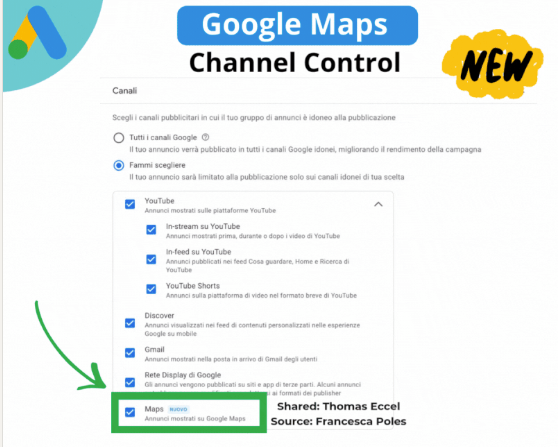
Why we care. This update unlocks a powerful, location-focused surface inside Demand Gen, allowing advertisers to tailor campaigns to high-intent moments such as local discovery and navigation. It also marks a meaningful step toward finer channel control in what has traditionally been a more automated campaign type.
Response. Advertisers are very excited by this update. CEO of AdSquire Anthony Higman has been waiting for this for decades:

Google Ads Specialist Thomas Eccel, who shared the update on LinkedIn said: “This is very big news and shake up things quite a lot!”
Between the lines. Google continues to respond to advertiser pressure for greater transparency and control, gradually breaking Demand Gen into more modular, selectable distribution channels.
What to watch. How Maps placements perform compared to YouTube, Discover, and Gmail—and whether Google expands reporting or optimization tools specifically for Maps inventory.
First seen. This update was first spotted by Search Marketing Specialist Francesca Poles, when she shared the update on LinkedIn
Bottom line. Adding Google Maps to Demand Gen channel controls is a significant shift that gives advertisers new strategic flexibility and the option to build fully location-centric campaigns.
Search Engine Land is owned by Semrush. We remain committed to providing high-quality coverage of marketing topics. Unless otherwise noted, this page’s content was written by either an employee or a paid contractor of Semrush Inc.

#Google #adds #Maps #Demand #Gen #channel #controls
