
Social Signals
How to build an E-E-A-T checker using an AI coding assistant

AI brokers, AI-connected IDEs (Built-in Growth Environments), and coding assistants akin to Claude Code, Cursor, and OpenClaw are gaining traction. Manufacturing usually depends on two distinct methods:
- Constructing an AI device inside the platform (for instance, Claude Code via Claude Desktop) that you should use throughout a number of classes.
- Utilizing these applied sciences to construct a standalone device that runs outdoors the AI surroundings. The code should be AI-assisted however is deployed independently on platforms akin to Netlify or Vercel.
On this article, I’ll deal with path 1 as a result of it’s extra accessible to entrepreneurs, although I’ll additionally contact on path 2. Particularly, we’ll construct a Google E-E-A-T checker with Claude Code in Claude Desktop. The identical methods apply simply to different AI coding instruments and platforms.
Why deal with E-E-A-T particularly?
E-E-A-T (Expertise, Experience, Authoritativeness, and Trustworthiness) is Google’s framework for evaluating the standard, credibility, and trustworthiness of content material.
Dig deeper. User-first E-E-A-T: What actually drives SEO and GEO
In contrast to web page pace and Core Net Vitals, Google’s E-E-A-T steering isn’t uncovered via easy API endpoints. As an alternative, Google offers a framework and broad methodology for individuals to use.
AI excels at processing giant quantities of unstructured data and making use of that type of framework. That’s why an E-E-A-T checker stood out as a helpful instance. If applied effectively, it’s an space the place AI can present significant perception and worth.
Challenge construct stack
- This device is constructed and run primarily in Claude Desktop utilizing Claude Code. You possibly can obtain Claude Desktop and sign up with a free Claude account. Nevertheless, utilizing Claude Code requires a Claude Professional, Max, Workforce, or Enterprise subscription, except you buy separate Claude Code API credit.
- For those who’re utilizing one other AI-powered IDE or desktop AI platform, that’s effective. The general workflow is comparable and will translate simply to different instruments.
- You’ll want a GitHub account to again up your mission.
- The mission generates a Microsoft Phrase audit doc, so Microsoft Workplace is advisable. For those who don’t have it, you’ll be able to adapt the strategy to generate an HTML/CSS/JavaScript software or use options akin to LibreOffice or OpenOffice.
Getting began
- Guarantee you may have both a Claude plan that helps Claude Code (Professional, Max, Workforce, or Enterprise) or an Anthropic API account with billing enabled.
- Obtain and set up Claude Desktop
- Sign up to Claude Desktop and join it to your Claude or Anthropic account.
- For those who’re utilizing a special desktop AI agent or an AI-powered IDE, launch it and be able to observe alongside.
As soon as every part was arrange, it was time to begin constructing.
I created a brand new Claude Code session in Claude Desktop referred to as “E-E-A-T Checker Demo” and gave Claude the next directions:

Usually, for those who give Claude an inventory of URLs to look at, it makes use of its built-in Web Fetch. That strategy will be blocked by some web sites, so I instructed Claude to launch a headless Python browser as an alternative.
I already had Python put in, so Claude simply linked to my present set up and created a headless browser for the duty. If required, Claude Code may set up lacking Python libraries and modules as a result of it could possibly use Command Immediate and PowerShell.
That is how Claude responded to my request:

For the headless browser, Claude selected the Chromium engine, which is a normal selection. Google Chrome is constructed on Chromium, making it a sturdy and broadly used browser.
Many builders use the Chromium engine with Python automation libraries akin to Selenium for automated testing. Right here, we’re repurposing the identical know-how to accumulate web site content material and assets for evaluation.
As soon as Claude had processed the supply supplies and constructed an preliminary scaffold, it returned the next message:
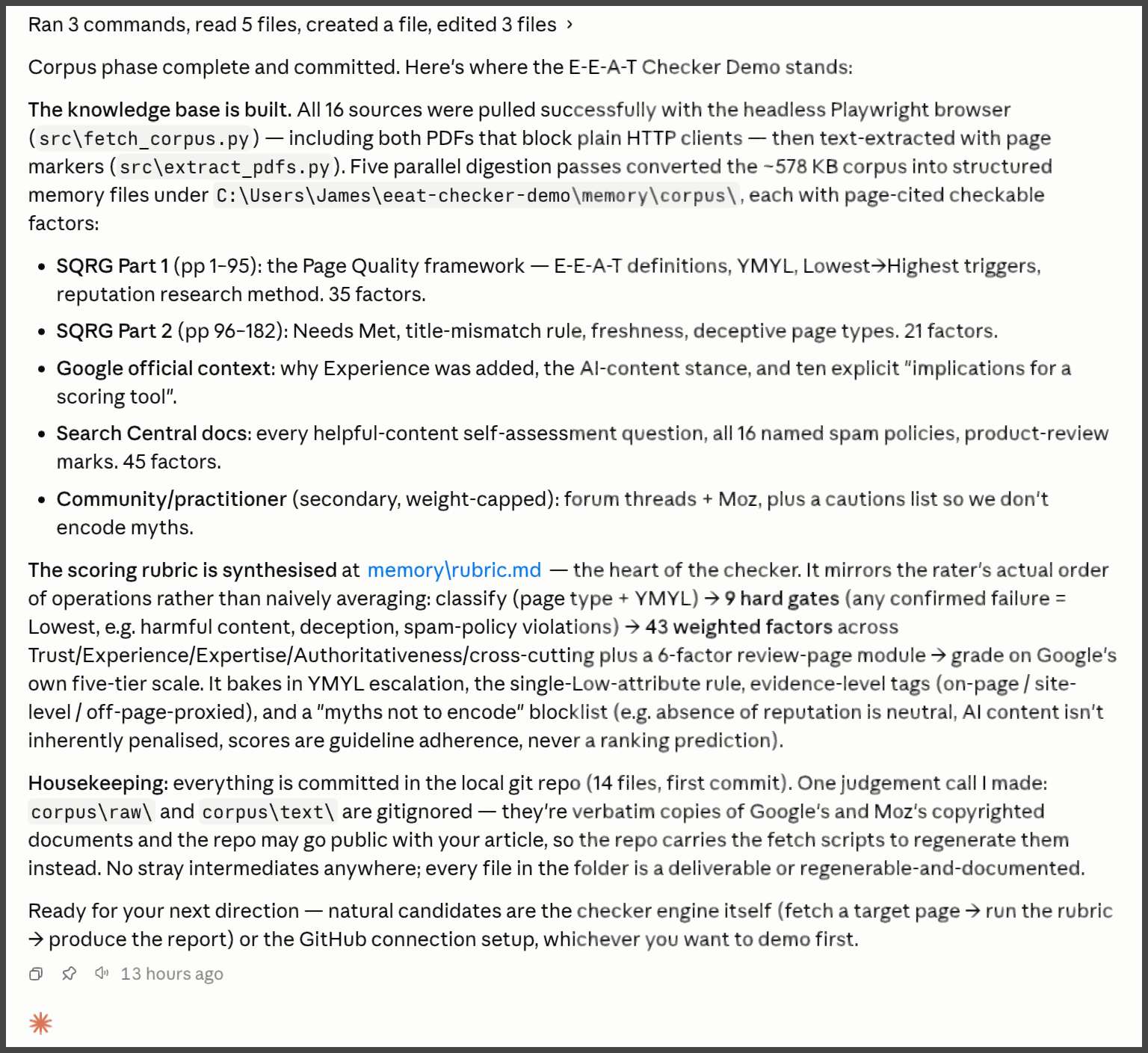
At this stage, Claude reported that:
- It had processed the supply supplies into its chosen information buildings, creating the primary model of its E-E-A-T data base.
- All content material and data extraction was accomplished efficiently.
- The scoring rubric had been synthesized.
- It had a technique for protecting verbatim copyrighted materials out of the GitHub repository.
- The native mission repository was created efficiently.
You don’t need to scrape these supplies from the online. You might evaluate the supply content material your self, then present Claude with your individual tailor-made steering and reference supplies as an alternative.
Deepening and testing the construct
With the framework in place, it’s time for a fast check. Nevertheless, connecting Claude to a single web page received’t present a significant E-E-A-T evaluation of a whole web site.
As an alternative, it is best to select consultant web page varieties. Whilst you might analyze an entire web site crawl, that’s often pointless.
For this demonstration, I merely asked Google which page types are most useful for an E-E-A-T assessment:

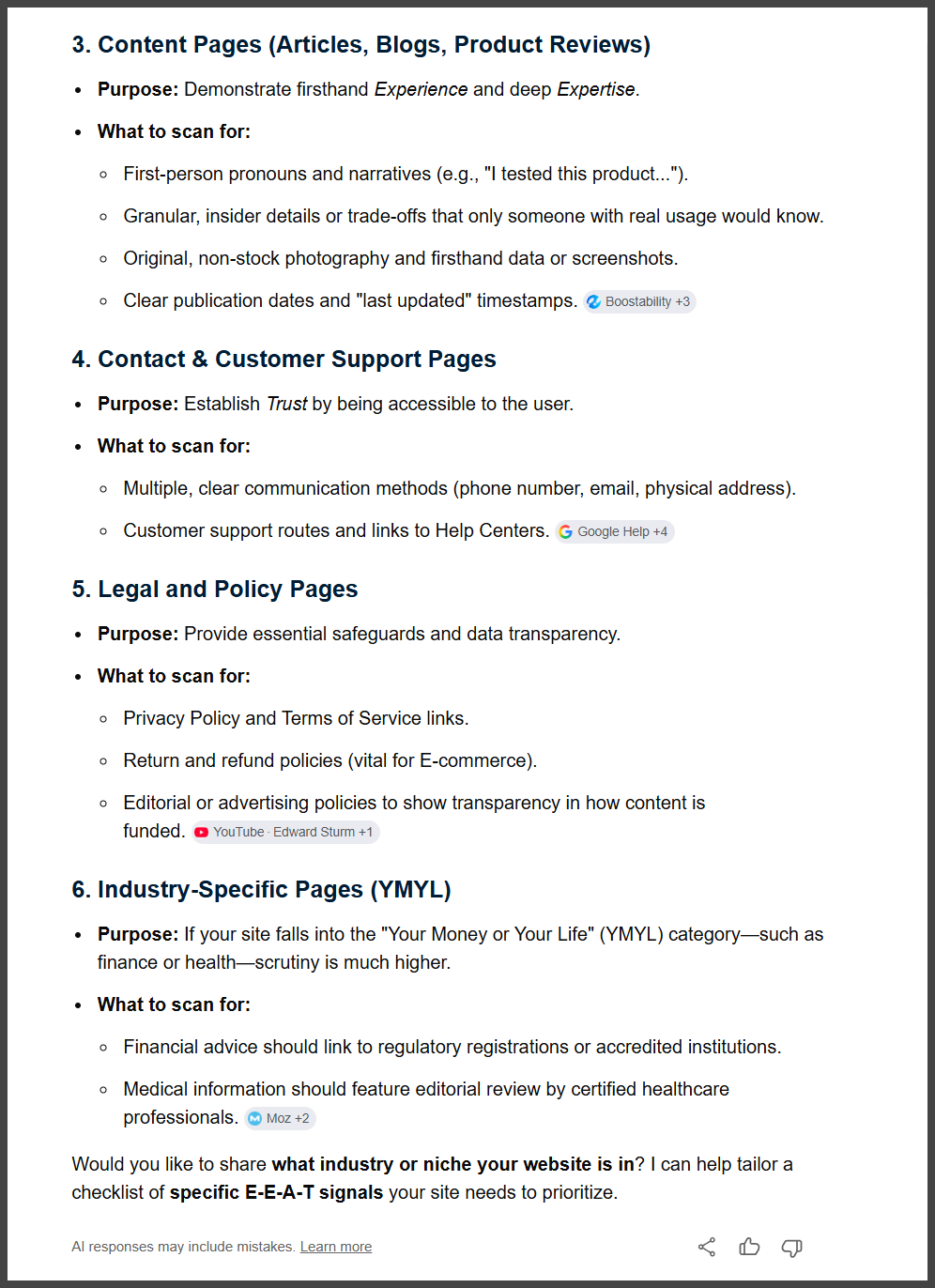
On this case, we’ll verify:
This can do for our demonstration.

Right here, Claude is instructed which pages to look at and given steering on the specified output format, which we’ll construct subsequent.

Claude then outlined its subsequent steps. Importantly, it confirmed that it could seize each the uncooked HTML supply and the rendered web page content material. As a result of Claude is working a headless browser, it could possibly execute and render code earlier than analyzing the web page.
After a while, Claude accomplished its preliminary manufacturing run:

Claude reported that it had generated the audit doc:
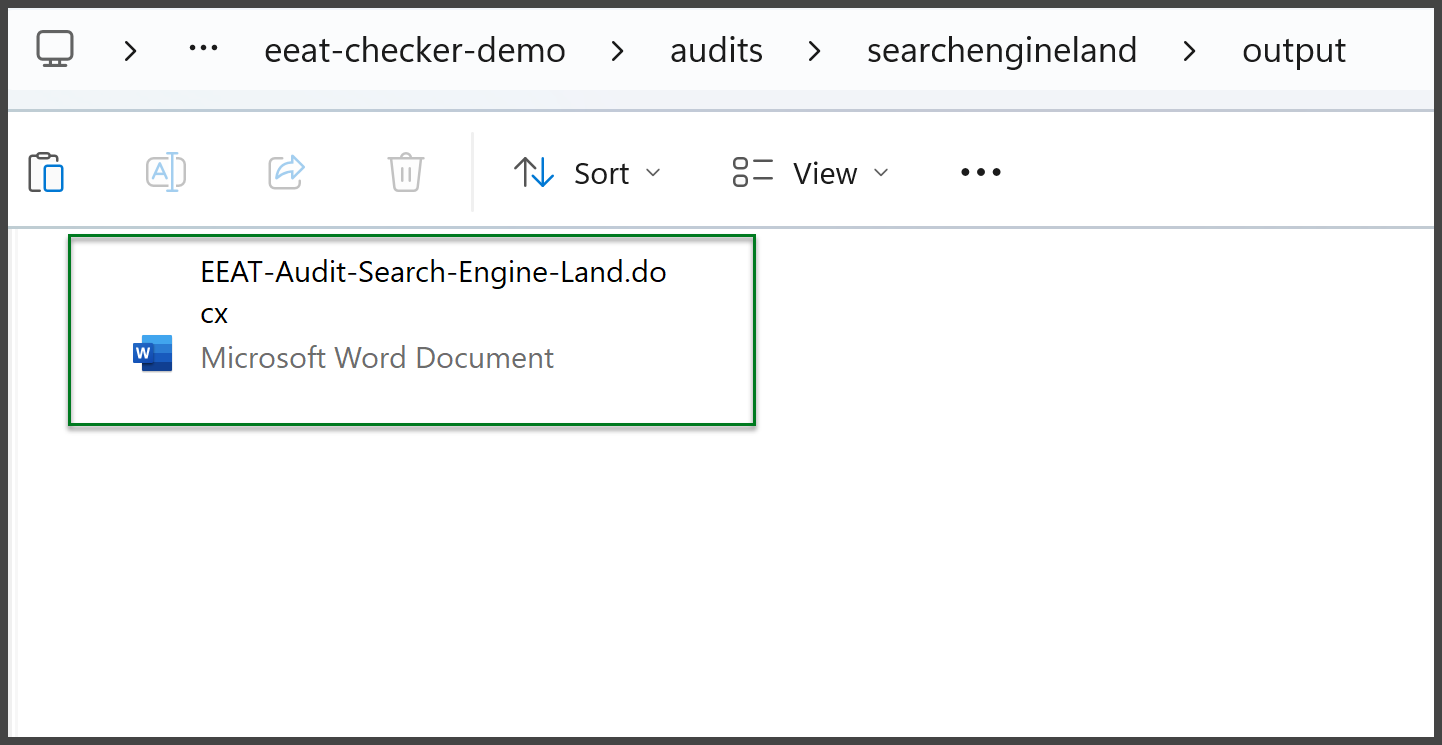
That is the audit Claude produced on its first run:


Total, the primary audit is stable. If wanted, we are able to refine it additional:

This was a considerable, detailed immediate for Claude to course of. Claude’s Fable 5 mannequin dealt with it comfortably, and Opus 4.8 was already able to managing structured prompts of this complexity. On this go, we requested Claude to enhance the doc’s formatting and readability earlier than reviewing the output once more.
That is what Claude returned on the second go:
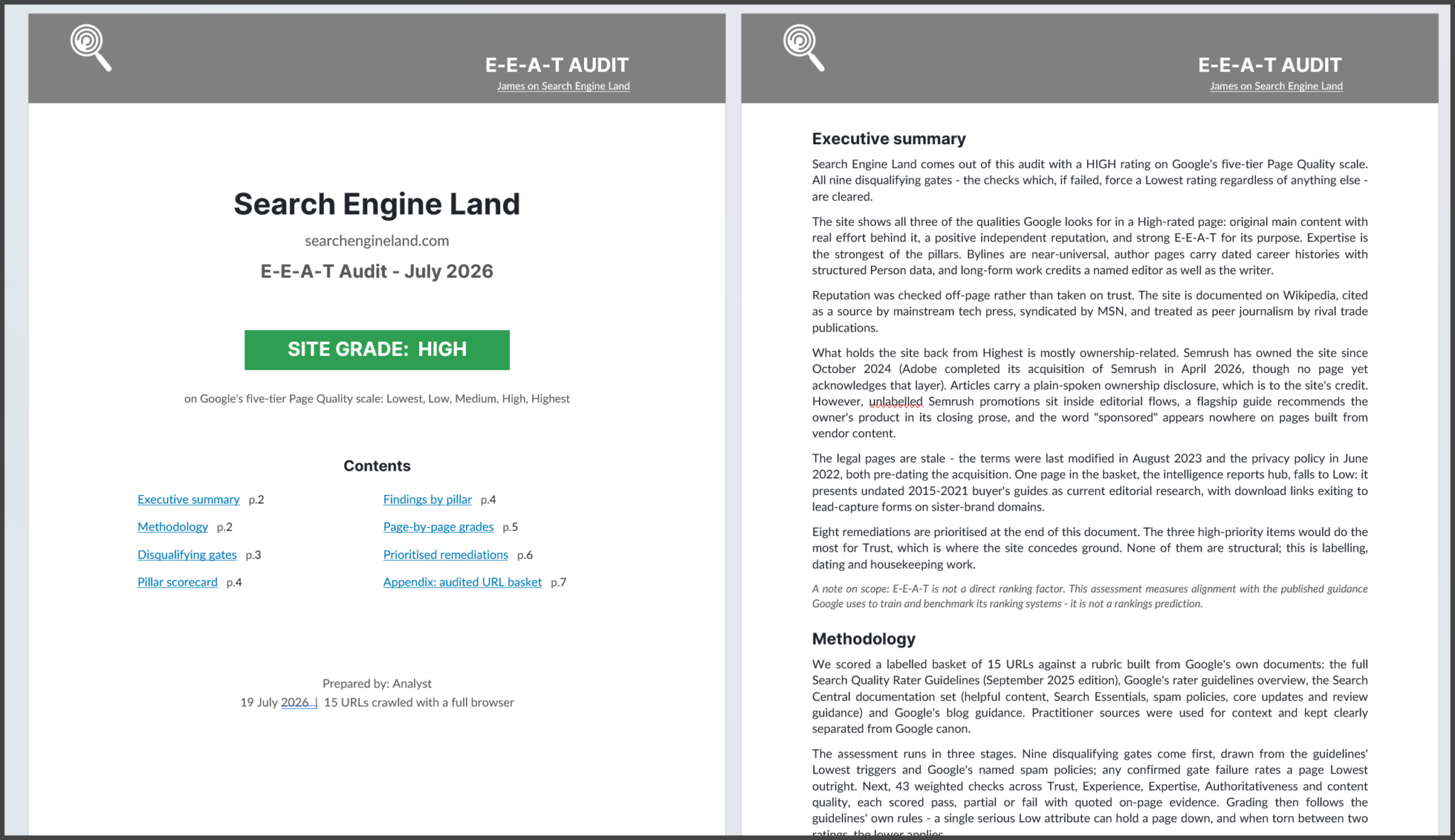

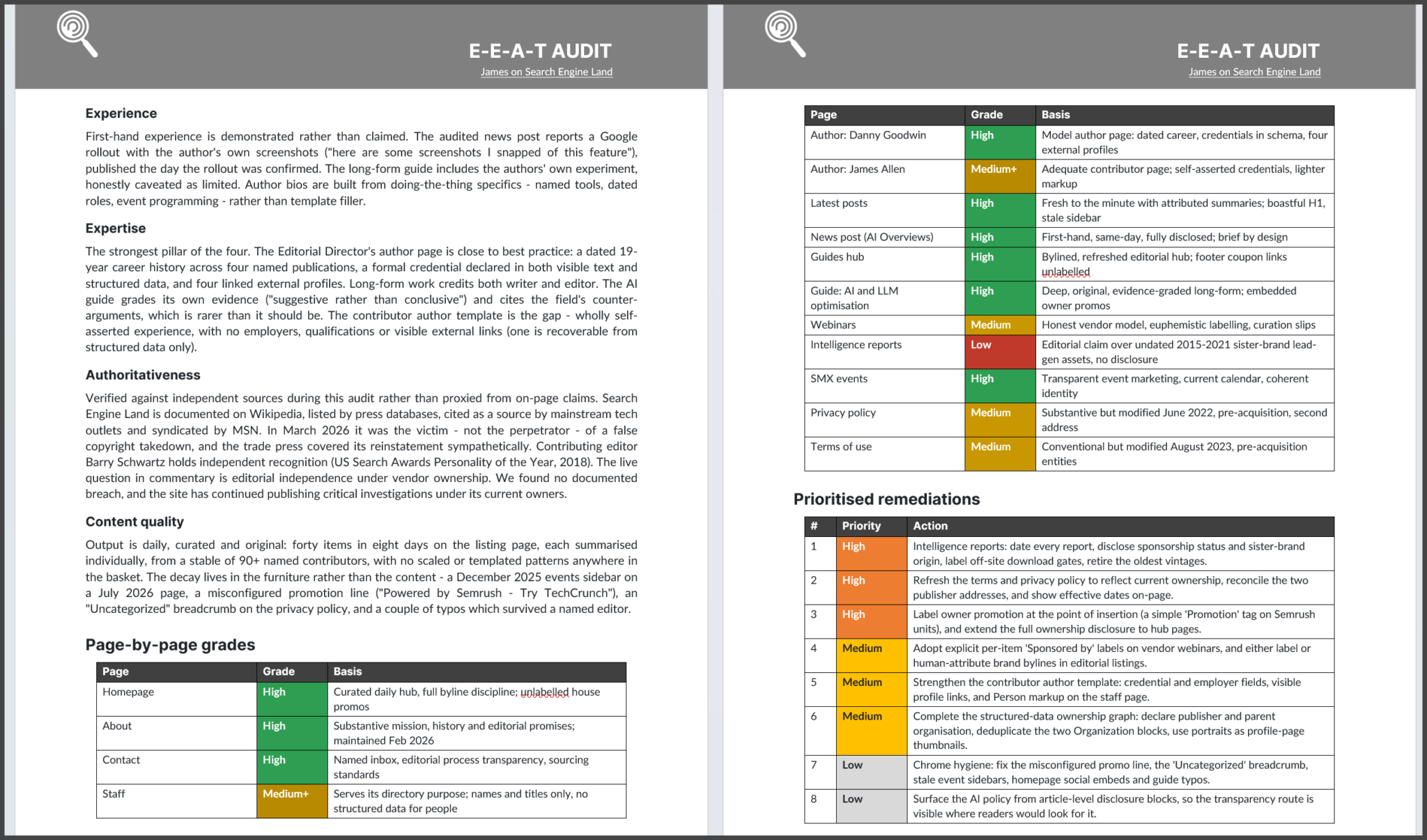
You possibly can download the PDF version to examine here.
Backing up and wrapping up
The doc now seems polished and reads effectively. We might proceed refining it by incorporating extra information and supply materials or by taking a extra important strategy to the audit and its construction.
For this demonstration, although, we’ve achieved the target, so it’s time to wrap up and again up the mission.

Claude then returned with an replace on its backup course of and repository preparation:


Subsequent, add the token to the .env file so Claude can create the GitHub repository:
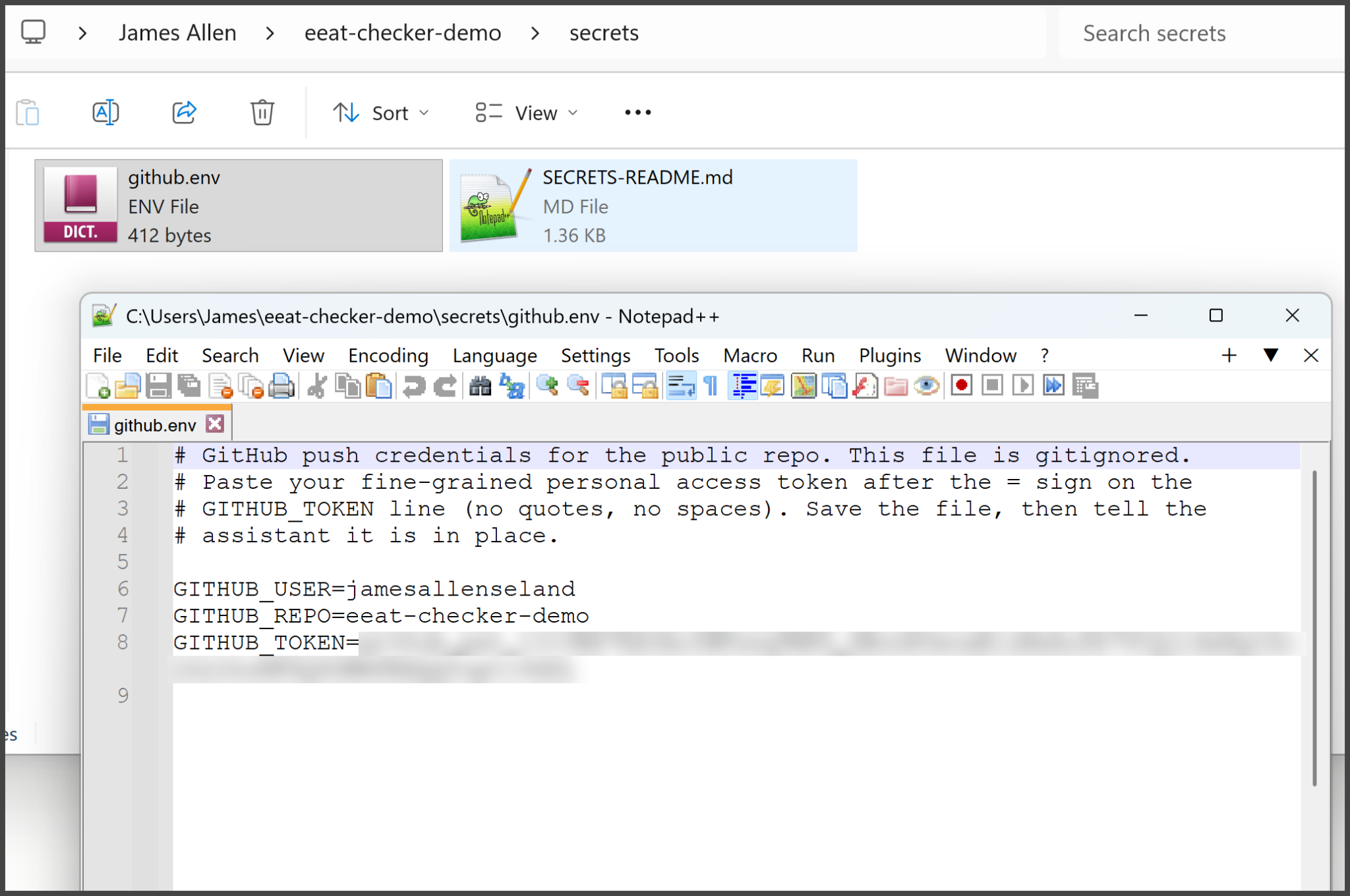
I then manually created the GitHub repository so Claude might push and handle the mission.

I might have prevented this step by connecting Claude to GitHub via Git utilizing OAuth. In that setup, Claude would have been in a position to create, handle, and configure repositories’ settings and permissions routinely. As an alternative, I used a fine-grained private entry token, which is less complicated to arrange however requires just a few additional handbook steps.
After that, Claude efficiently created the distant repository and pushed the mission from my native machine:

You could find the public GitHub repository for this demonstration here.
For those who level your individual Claude Code occasion on the repository, you’ll be able to clone it and begin utilizing the mission instantly. Word that it’s designed as an agentic mission. For those who open it in a standard IDE akin to Visible Studio, it received’t operate as meant. You’ll want an AI coding surroundings akin to Claude Code, Cursor, or OpenClaw.
Conclusions
In a single session, we constructed a device that reads Google’s E-E-A-T documentation, shops it in native reminiscence, crawls a particular set of pages, and produces a scored audit as a formatted Phrase doc.
No conventional software program growth abilities had been required. Essentially the most technical steps concerned pasting a token right into a configuration file and clicking Create Repository.
A couple of key takeaways:
- E-E-A-T was a deliberate selection. It evaluates unstructured steering somewhat than an API, making it effectively suited to an AI agent. The identical strategy might be utilized to model tips, editorial requirements, accessibility evaluations, and comparable frameworks.
- Perceive the device’s limitations. E-E-A-T isn’t a direct rating issue, and no checker can assure improved search rankings. As an alternative, it measures how carefully a web site aligns with the steering Google makes use of to guage content material high quality. That’s nonetheless a precious benchmark.
- Deal with the primary output as a powerful draft. Evaluate it, make corrections, and feed these modifications again into the mission. As a result of the device shops its data in native reminiscence, every refinement improves future audits.
- Again up the mission. As soon as the reminiscence recordsdata, prompts, and scripts are pushed to GitHub, the device’s complete data base is preserved. In case your machine fails, restoring the mission is so simple as cloning the repository.
- Attempt it by yourself web site. Clone the repository, level Claude Code at your web site, and evaluate the outcomes. In my check, Search Engine Land carried out effectively general, however the audit nonetheless recognized stale authorized pages and an undisclosed lead-generation hub.
If you wish to pull my repo into your individual Claude Code or different agentic IDE, right here’s a immediate you’ll be able to place in a brand new session / chat:
# Arrange the E-E-A-T Checker mission
I wish to arrange the **E-E-A-T Checker** mission from this public repo:**https://github.com/jamesallenseland/eeat-checker-demo**
It is an *agentic* mission: its directions, reminiscence recordsdata and abilities are all within the repo, written for an AI coding assistant such as you.
## What to do
1. **Clone the repo** into a wise initiatives folder for my system, then work inside that folder for the remainder of this session.
2. **Orient your self.** Learn, on this order: - `README.md`
- `CLAUDE.md`
- `docs/FILES-MAP.md`
- `reminiscence/MEMORY.md`
   Observe the studying order the reminiscence index units out earlier than doing any work.
3. **Verify conditions** in opposition to README.md:
   - Python 3.10+
   - `playwright` (with chromium put in), `pypdf`, `python-docx`, `pymupdf`
   - The **Lato** and **Inter** fonts (free, Google Fonts)
Inform me what's lacking and set up what you'll be able to - however **ask me first** for something system-level. I am conscious the Phrase finalise step is Home windows-only; if I am not on Home windows with Phrase, use the documented options.
4. **Do not regenerate the uncooked corpora.** The supply paperwork and crawl captures are intentionally absent (third-party copyright). The digests and rubric in `reminiscence/` imply the mission works with out them.
## Whenever you're finished
- Affirm the mission is operational
- Listing the **two mission abilities** it ships with
- Ask me for a **goal web site** plus a basket of **~15 URLs** so we are able to run my first E-E-A-T audit
> Don't audit something till I've confirmed the goal.
The immediate above is proven in a code block for readability. To enhance its effectiveness, you’ll be able to enrich it with markdown formatting to offer a clearer construction and richer context for the AI.
Contributing authors are invited to create content material for Search Engine Land and are chosen for his or her experience and contribution to the search neighborhood. Our contributors work underneath the oversight of the editorial staff and contributions are checked for high quality and relevance to our readers. Search Engine Land is owned by Semrush. Contributor was not requested to make any direct or oblique mentions of Semrush. The opinions they specific are their very own.
#construct #EEAT #checker #coding #assistant
