
Social Signals
Schema.org now shows you how many sites are using each schema type

Jun

The parents over at Schema.org are actually offering mixture utilization statistics for Schema.org phrases throughout the general public internet. This may present you what number of domains are utilizing a selected schema/structured information aspect.
Schema.org announced, “we’re happy to share a brand new dataset offering mixture utilization statistics for Schema.org phrases throughout the general public internet.” The dataset are up to date month-to-month and they’re aggregated on the area degree and offered in recognition vary buckets. “This method helps filter every day noise whereas highlighting significant adoption traits for researchers and toolmakers,” Schema.org wrote.
What it seems like. Here’s a screenshot of two of those Schema.org pages, author schema and event schema exhibiting the utilization statistics in the direction of the highest:
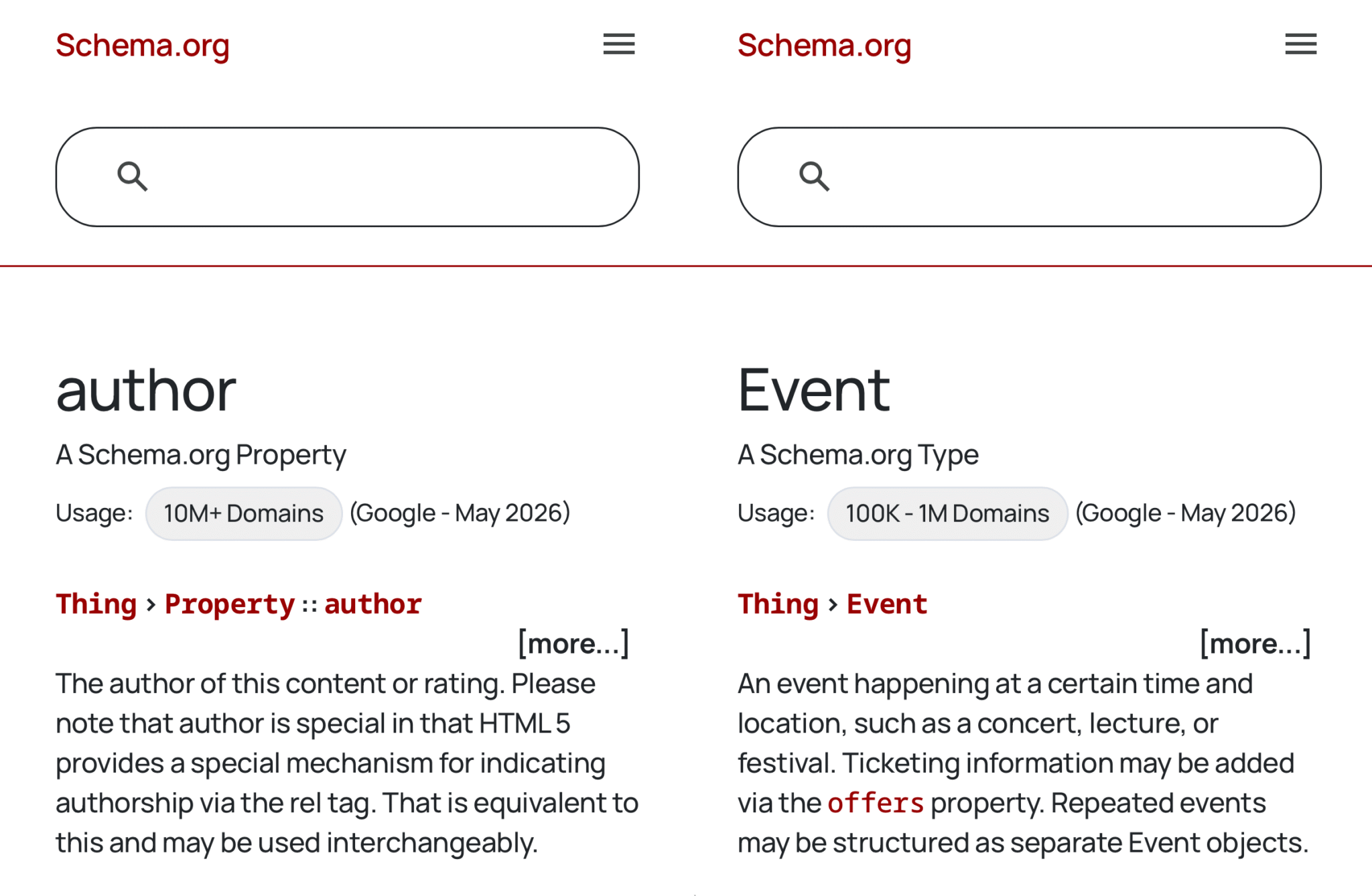
Extra in regards to the information. Schema.org shared extra details about the usage statistics over here, here’s a abstract:
- Schema.org time period frequencies are measured inside Google’s public internet crawling infrastructure. The information is aggregated on the area degree (like instance.com), not by particular person pages. This implies should you use the identical time period on 100 pages of your website, it nonetheless solely counts as one area utilizing it.
- As a substitute of exhibiting actual, uncooked numbers (which change every day and may be noisy), web sites are grouped into vary “buckets” (like “10K – 100K” domains). This retains the information extra steady and protects web site privateness.
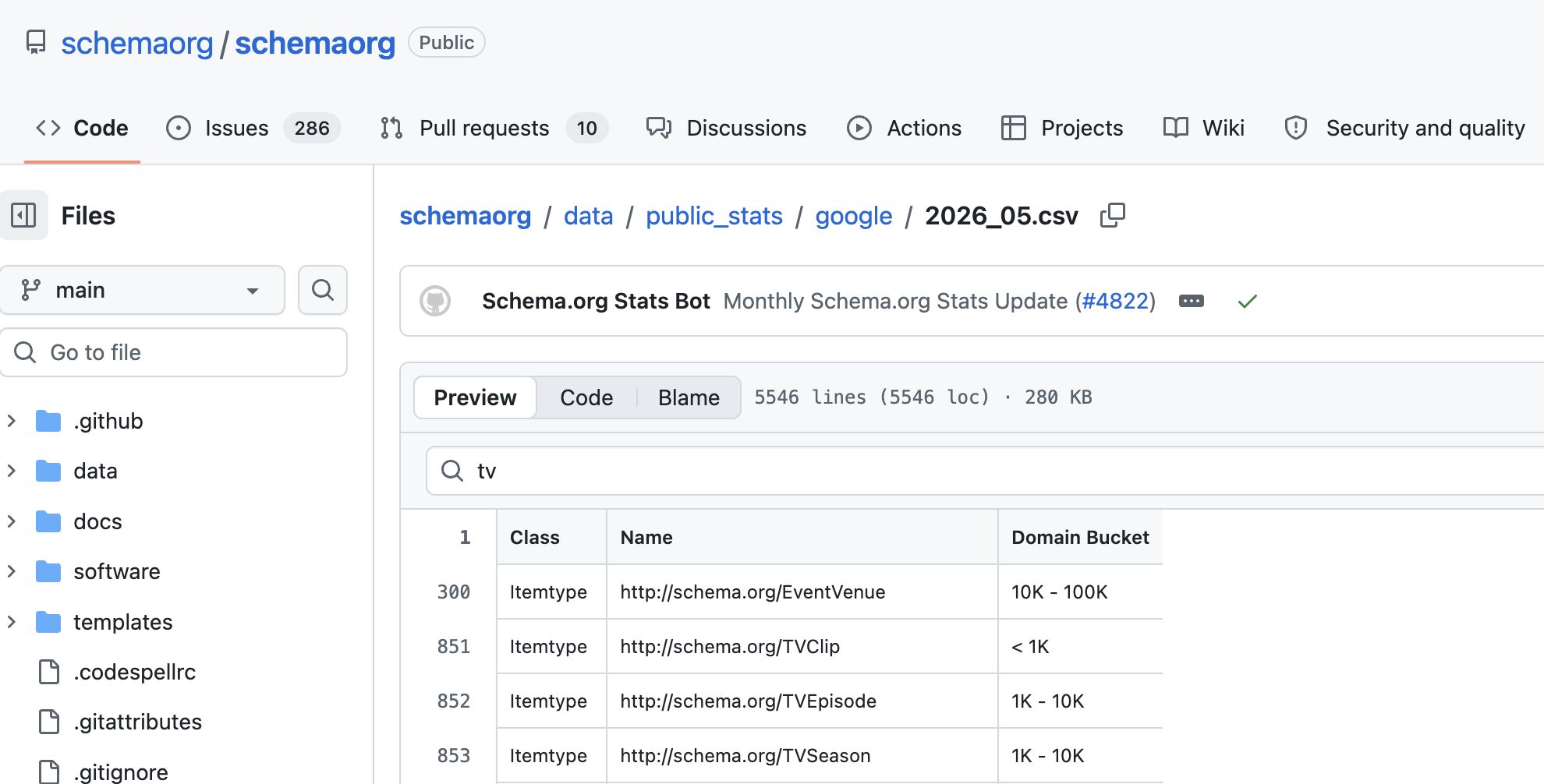
- HubThe uncooked information can be found on the GitHub website at Google Public Stats dataset on GitHub. They’re accessible in JSON and CSV with the identical information and in a JSON abstract format with aggregated bucket distributions. They’re up to date month-to-month.
- Time period Kind: The kind of time period. That is both
Kind(like “Individual” or “Occasion”) orProperty(like “value” or “phone”). - URI: The official URI of the time period (for instance:
http://schema.org/Individual). - Area Depend Bucket: The vary of distinctive domains utilizing the time period (for instance:
100K - 1Mdomains).
Here’s a screenshot of GitHub:
Why we care. As a result of we love information. Okay, outdoors of simply loving information, understanding if a selected schema aspect is widespread or not could also be sufficient to persuade your improvement staff to implement that schema code in your web site.
Search Engine Land is owned by Semrush. We stay dedicated to offering high-quality protection of promoting matters. Until in any other case famous, this web page’s content material was written by both an worker or a paid contractor of Semrush Inc.

#Schema.org #reveals #websites #schema #sort
